The Power of Kids’ Literacy: An Interview with Caroline Lawrence
To celebrate World Book Day this week, we spoke to one of our favourite children’s authors Caroline Lawrence about how to engage young minds with books and storytelling in the age of digital distraction. We have always been a huge fan of Caroline’s work - and we are honoured that her numerous visits to Butser have even inspired some of her titles! This interview was also included in our latest educational newsletter Lessons from the Past - a free, bi-monthly newsletter packed with learning resources themed around the ancient world.
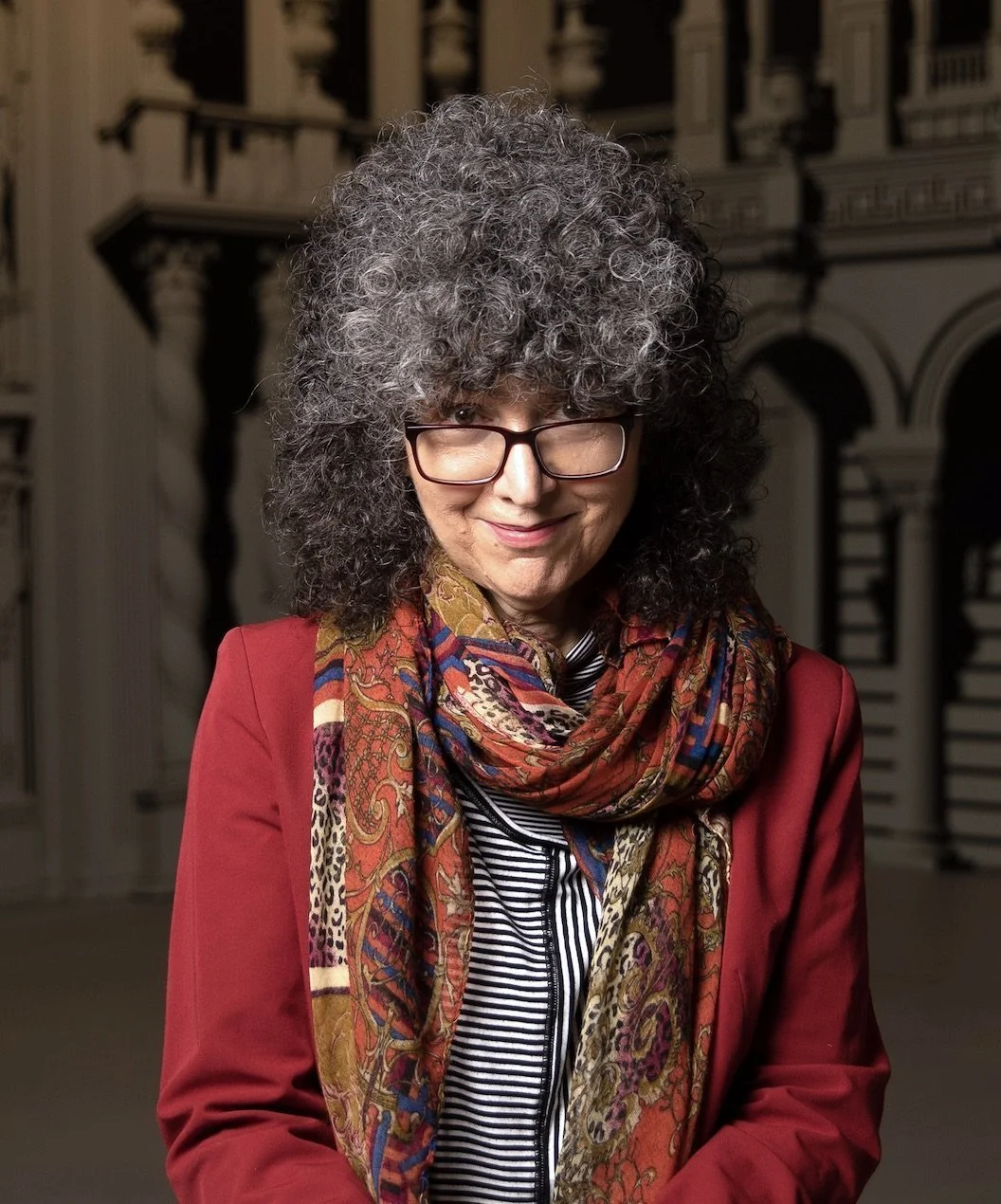
Bestselling children’s author Caroline Lawrence
Many education specialists see reading as the foundation of all learning. In your experience, what makes children's literacy so powerful, and how can stories unlock confidence and curiosity in young readers?
From time immemorial, stories have taught children how to think about themselves and the world they live in. For many children with busy, distracted or absent parents, this is the only way for them to learn important concepts and ideas. Stories encourage empathy because they show how other people think and live. This is vitally important for us as humans to get on with each other. Stories also provide an escape for children who might be suffering stress or anxiety caused by death, sickness, bullying or a looming change in their lives. Stories show that other people in other places and times had things just as bad, or even worse, than they do.
You've inspired countless children to fall in love with reading through The Roman Mysteries and other stories. Why do you think historical fiction is so effective at helping children connect with the past?
One thing I love about writing historical fiction (and reading it, too) is that it gives the reader a little distance from the present. Sometimes certain topics are too scary for children to think about, but if you can write about these problems for children in another place in time children find it easier to read about. Although the books might be set in the past, the solutions are often the same because emotionally we haven't changed in thousands of years! There’s a famous line from L. P. Hartley’s novel The Go-Between: ‘The past is a foreign country: they do things differently there.’ By reading about people in the past, children are reading about people in different cultures and countries in a way, which again, makes them more empathic.
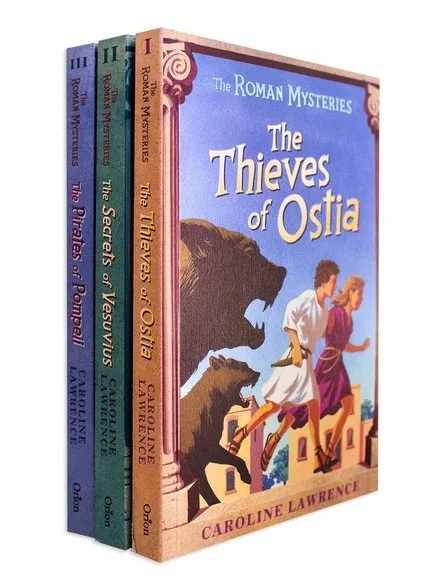
Caroline’s Roman Mysteries series spans 17 books
The young characters in your stories solve puzzles, make mistakes and grow in courage. Why is it so important for children to see people their own age at the centre of adventure and discovery?
Many children's stories (like mine) have children who are on their own. They are either orphaned or have only one parent or are just neglected and left on their own. This is not because we children’s authors are sadists, but because we want to show children at the centre of adventure and discovery, just as you said!
In an era of distraction, lack of focus and excessive screen time, do you have any advice for teachers and parents who are struggling to engage children with reading?
I think this is the most important question you've asked. We do live in a world of distraction and fractured concentration! I think many of us adults have noticed a change in our ability to concentrate. I certainly have. Some scholars and educators have suggested that we are now in a ‘post-literate world’. This is fancy language which just means children are not reading in anywhere like the same number that they used to. I agree with this! As parents, educators and writers, we can either bemoan this fact or we can adapt. One way of adapting is to encourage children to absorb stories in different ways which are more suited to their diminished concentration levels. Of course we must encouraged children to read long chapter books. But we must also find new ways of storytelling. Because it is storytelling that is the most important thing - not just the act of reading.
So we can present them with short stories, poems, and even micro-fiction. We can encourage them to listen to audiobooks and storytellers. They’re going to be watching short-form content on their phones so we should make sure this content is excellent. Like almost every parent, I hate the idea of children on their devices all the time. I recently heard about a four-year old who was given a book and kept pressing the cover because she didn’t know how a book worked! She thought it was an electronic pad.
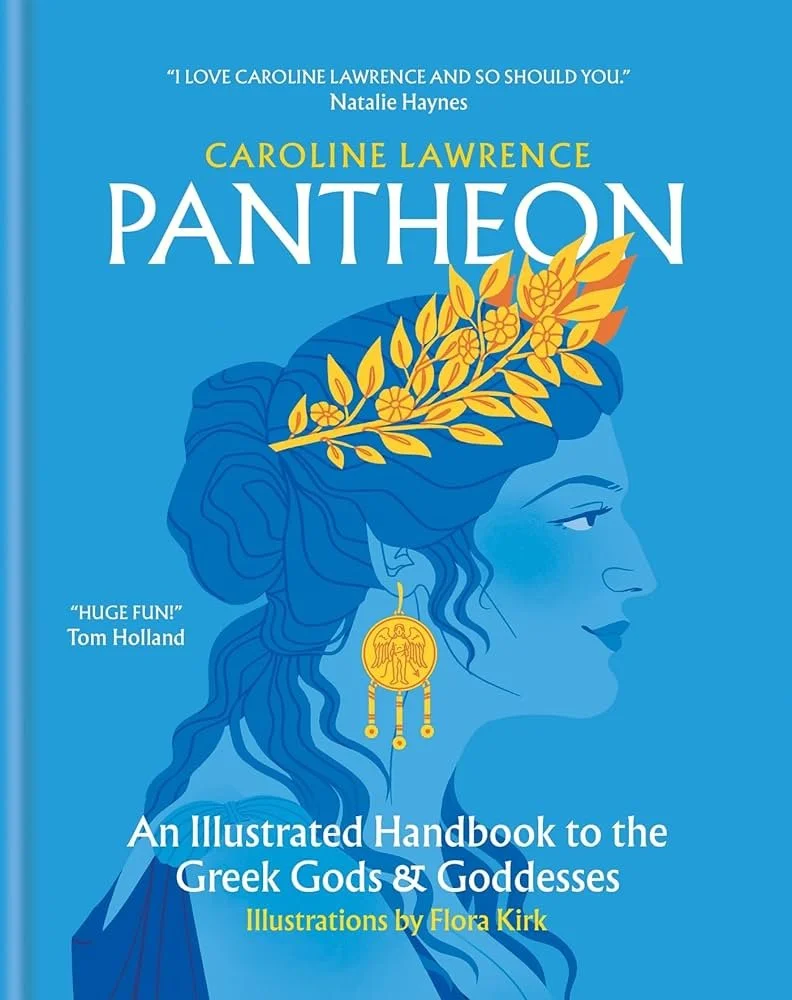
Caroline has also written non-fiction books about the ancient world and creative writing
What are you currently working on?
My current project is an interactive colouring book based on Homer’s Odyssey. Each page will offer a haiku (a very short poem) telling an aspect of the story or world around the story. Each page will give the child a chance to physically interact by drawing, doodling, colouring and most importantly by writing their own poems in the book. As far as I know, nobody has done this before! Nobody has made a book which combines pictures and words to tell a story and educate, and which encourages the child to physically interact with pencil, pen or crayon. The beauty is that they can’t do it on a pad or phone - they need to physically interact with a book! I hope to publish this book around March 2026, and you can watch my work in progress on my Instagram page @carolinedaylawrence.
Where can we find your stories and books?
You can read any of my 40+ traditional books as physical books, on kindle (or smartphone), or as audiobooks! You can also watch televised versions of my Roman Mysteries on Apple TV! I am also currently producing my four-book Roman Quests series - a sequel to the Roman Mysteries set in Roman Britain (and based heavily on Butser Ancient Farm) - as audiobooks. I will send a code to listen for FREE to the first thirty readers to email me at carolinelawrence@me.com.